



What Is Nature Play?
Nature play is child-led learning that takes place in natural environments using open-ended materials found outdoors. Instead of structured toys, children are encouraged to explore with items such as:
- Leaves
- Sticks
- Stones
- Flowers
- Bark
- Sand
- Water
- Mud
- Seeds
- Trees and plants
Nature play allows children to use their imagination, solve problems, ask questions, and learn through real-life experiences.
Why Is Nature Play Important?
Children are naturally curious. Outdoor environments provide endless opportunities for investigation, creativity, movement, and discovery.
Research shows that regular nature play supports children's:
- Physical development
- Emotional wellbeing
- Cognitive growth
- Language development
- Social skills
- Creativity
- Confidence
- Resilience
Nature also encourages children to slow down, observe their surroundings, and develop a lifelong appreciation for the environment.
1. Builds Strong Bodies
Outdoor play naturally encourages movement.
Children climb, balance, jump, run, dig, crawl, and lift, helping to strengthen:
- Large muscle groups
- Balance and coordination
- Core strength
- Agility
- Spatial awareness
- Overall fitness
Fine motor skills also develop as children pick up tiny leaves, thread natural materials, build with sticks, or create nature art.
2. Supports Brain Development
Nature provides endless opportunities for problem-solving and critical thinking.
Children ask questions such as:
- Why do leaves change colour?
- How can we build a stronger stick bridge?
- Which insects live under this log?
- Why does water flow downhill?
These everyday investigations encourage curiosity, observation, reasoning, and scientific thinking.
3. Encourages Creativity and Imagination
Unlike many commercial toys, natural materials have no fixed purpose.
A stick might become:
- A fishing rod
- A magic wand
- A bridge
- A dinosaur bone
- A paintbrush
- A measuring tool
Open-ended play encourages children to think creatively and develop flexible thinking skills that support future learning.
4. Develops Confidence and Independence
Nature presents achievable challenges.
Whether climbing a small hill, balancing on stepping stones, or carrying a bucket of water, children learn to:
- Assess risks
- Make decisions
- Solve problems
- Keep trying
- Celebrate success
Each accomplishment builds confidence and resilience.
5. Supports Social Skills
Outdoor play naturally encourages teamwork.
Children learn to:
- Share resources
- Take turns
- Cooperate
- Negotiate
- Listen to others
- Solve conflicts respectfully
Large outdoor spaces also allow children to move freely while developing positive relationships with peers.
6. Improves Emotional Wellbeing
Time in nature has a calming effect on many children.
Outdoor play can help reduce stress while supporting:
- Emotional regulation
- Mindfulness
- Self-confidence
- Happiness
- Relaxation
- Overall wellbeing
Natural environments often provide peaceful spaces where children feel safe to explore at their own pace.
7. Encourages Healthy Risk-Taking
Nature play allows children to experience manageable challenges under careful supervision.
Learning to:
- Walk across uneven ground
- Balance on logs
- Climb gentle slopes
- Explore different textures
helps children develop judgement, confidence, and resilience while learning to manage risk safely.
8. Inspires a Love of Learning
Nature changes every day.
Children notice:
- New flowers blooming
- Changing seasons
- Different bird calls
- Insects at work
- Weather patterns
- Plant growth
These experiences spark meaningful conversations and encourage children to ask questions, investigate, and discover new ideas.
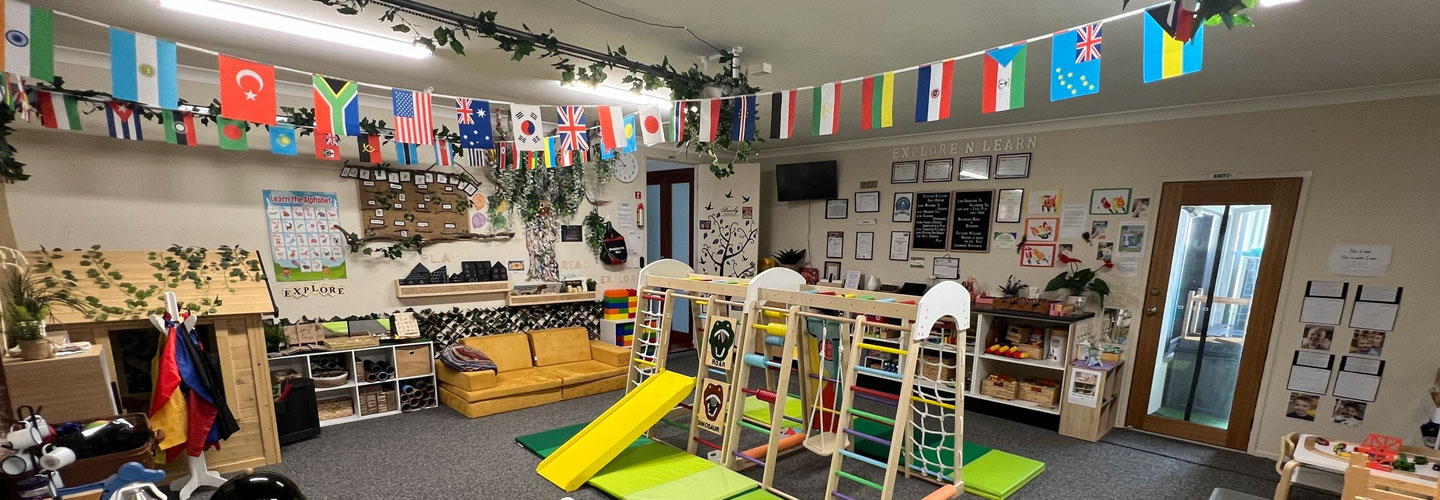
Nature Play at Explore N Learn Family Day Care
At Explore N Learn Family Day Care, nature is an important part of our everyday program.
Children enjoy opportunities to:
- Explore our outdoor learning spaces
- Care for plants and gardens
- Investigate insects and wildlife
- Create with loose natural materials
- Dig, plant, and water
- Participate in sensory experiences
- Observe seasonal changes
- Enjoy outdoor storytelling
- Engage in messy play using natural resources
These experiences support children's learning while fostering respect for the natural world.
Nature Play and the Early Years Learning Framework (EYLF)
Our nature play experiences align with the Early Years Learning Framework (EYLF) by supporting children to become:
- Confident and involved learners
- Effective communicators
- Connected with and contributing to their world
- Strong in their sense of wellbeing
- Secure in their identity
Nature provides meaningful opportunities for children to explore, investigate, collaborate, and develop a lifelong love of learning.
How Families Can Encourage Nature Play at Home
You don't need a large backyard to enjoy nature.
Simple ideas include:
- Taking walks in local parks
- Growing herbs or flowers in pots
- Collecting leaves and sticks
- Creating nature art
- Watching birds
- Looking for insects
- Playing in the rain with appropriate clothing
- Building with natural materials
- Having a picnic outdoors
- Reading books under a tree
Small, everyday experiences help children build confidence and curiosity while connecting with the natural world.
Frequently Asked Questions
What age is nature play suitable for?
Nature play benefits children of all ages. Activities can be adapted to suit infants, toddlers, preschoolers, and school-aged children.
Is nature play safe?
Yes. With appropriate supervision and age-appropriate experiences, nature play allows children to explore, take manageable risks, and develop confidence in a safe environment.
Why is outdoor play better than screen time?
Outdoor play encourages movement, creativity, social interaction, communication, problem-solving, and exploration—supporting all areas of development in ways that passive screen time cannot.
How often should children experience nature play?
Daily outdoor experiences, even for short periods, provide valuable opportunities for learning, physical activity, and emotional wellbeing.
Discover the Joy of Nature Play
At Explore N Learn Family Day Care, we believe children learn best when they can explore, imagine, and discover through meaningful experiences in nature.
Our outdoor learning environment encourages curiosity, creativity, resilience, and confidence while supporting every area of children's development. Whether children are investigating insects, caring for the garden, building with natural materials, or simply enjoying fresh air, nature play helps lay the foundation for lifelong learning.
If you're looking for a nurturing family day care where children can grow through outdoor exploration and play-based learning, Explore N Learn Family Day Care offers a welcoming environment where every day is an opportunity to discover something new.