



What Is Loose Parts Play?
Loose parts are open-ended materials that children can move, combine, sort, stack, arrange, take apart and redesign in countless ways. Unlike traditional toys with a single purpose, loose parts have no "right" or "wrong" way to be used.
Loose parts can include both natural and recycled materials such as:
- Pinecones
- Sticks
- Stones
- Shells
- Leaves
- Wooden slices
- Seed pods
- Feathers
- Bottle lids
- Cardboard tubes
- Fabric pieces
- Pegs
- Buttons (used only with children old enough to safely handle small items)
- Corks
- Small baskets and containers
Every collection of loose parts offers endless possibilities for exploration and creativity.
Why Is Loose Parts Play Important?
Children are naturally curious and love to experiment. Loose parts encourage them to think independently, test ideas and create something unique every time they play.
Rather than following instructions, children become the designers, builders and problem-solvers.
Research and early childhood practice show that loose parts play supports:
- Creativity
- Critical thinking
- Communication
- Collaboration
- Physical development
- Early mathematics
- Scientific thinking
- Confidence
- Resilience
1. Encourages Creativity and Imagination
One child's creation might be a castle, while another sees a spaceship or a fairy garden.
Because loose parts don't have a fixed purpose, children are free to imagine, invent and tell stories through their play.
This type of imaginative play strengthens flexible thinking and supports innovation from an early age.
2. Develops Problem-Solving Skills
Children naturally experiment by asking themselves questions such as:
- Which blocks will balance?
- How can I build something taller?
- What happens if I add another stick?
- How can I stop my tower from falling?
Each challenge encourages children to plan, test, adapt and try again—valuable skills for lifelong learning.
3. Supports Early Mathematics
Loose parts provide meaningful opportunities to explore mathematical concepts through play.
Children investigate:
- Counting
- Sorting
- Matching
- Patterns
- Shapes
- Size comparisons
- Measuring
- Estimating
- Symmetry
Because learning happens naturally, mathematical thinking becomes enjoyable and engaging.
4. Strengthens Fine Motor Skills
Manipulating small objects helps strengthen the muscles needed for writing and everyday tasks.
Children develop fine motor control by:
- Picking up small objects
- Threading materials
- Stacking stones
- Building structures
- Arranging patterns
- Using tongs or tweezers
These experiences improve coordination, hand strength and finger dexterity.
5. Builds Communication Skills
Loose parts often inspire collaborative play.
Children talk about:
- Their ideas
- Their designs
- Their plans
- Solving challenges together
- Sharing materials
- Negotiating roles
These conversations help develop vocabulary, listening skills and confidence when expressing ideas.
6. Encourages Scientific Thinking
Children naturally become little scientists.
They observe, predict, investigate and discover through hands-on exploration.
For example, they may ask:
- Which materials float?
- Which objects roll?
- What makes a bridge stronger?
- Why does this tower collapse?
Loose parts encourage inquiry-based learning every day.
7. Builds Confidence and Independence
There is no single correct answer when playing with loose parts.
Children make their own choices, follow their own ideas and experience success through experimentation.
This helps children become:
- Independent thinkers
- Confident decision-makers
- Creative problem-solvers
- Persistent learners
Mistakes become opportunities to learn rather than something to avoid.
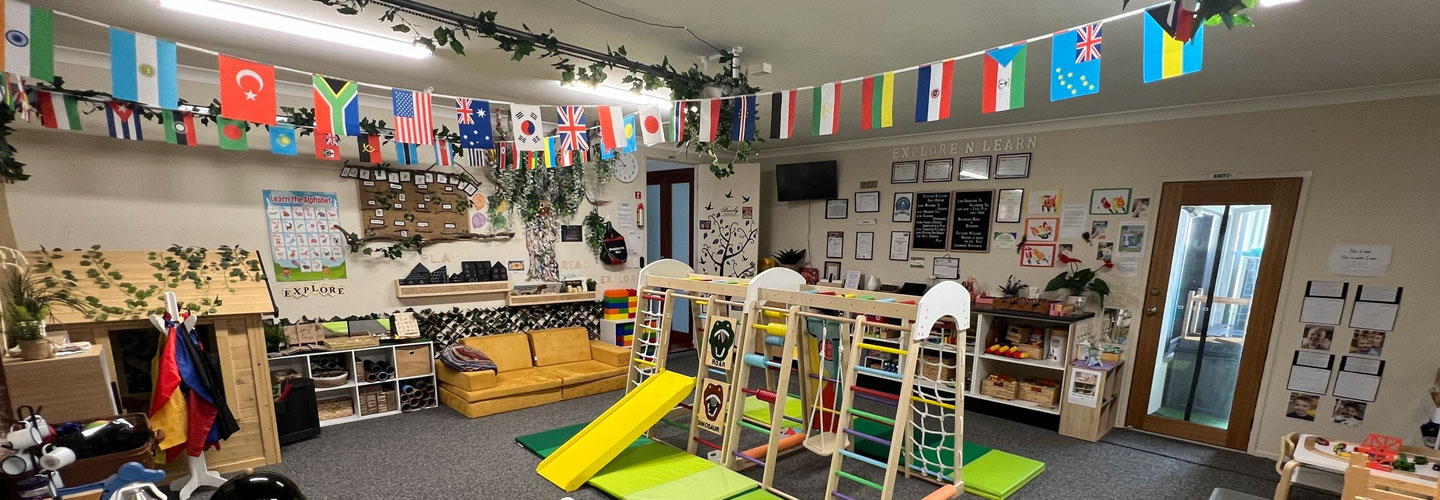
Loose Parts Play at Explore N Learn Family Day Care
At Explore N Learn Family Day Care, loose parts are thoughtfully incorporated into our everyday learning environment.
Children enjoy opportunities to:
- Build imaginative creations
- Design small-world play scenes
- Explore nature collections
- Create patterns and mandalas
- Construct roads, bridges and towers
- Investigate balance and engineering
- Use recycled materials for creative projects
- Combine loose parts with dramatic play
- Explore mathematical concepts through hands-on learning
Each experience is child-led, allowing children to direct their own learning while educators extend their thinking through conversation and thoughtful questions.
Loose Parts and Nature Play
Loose parts play and nature play work beautifully together.
Natural materials encourage children to connect with the environment while developing creativity and respect for the world around them.
Children might:
- Build fairy gardens
- Create animal habitats
- Design obstacle courses
- Construct miniature villages
- Sort leaves by colour or size
- Build sculptures using sticks and stones
Every outdoor adventure becomes an opportunity for discovery.
Loose Parts Play and the Early Years Learning Framework (EYLF)
Loose parts play supports all five learning outcomes of the Early Years Learning Framework (EYLF) by helping children become:
- Strong in their sense of identity
- Connected with and contributing to their world
- Confident and involved learners
- Effective communicators
- Strong in their wellbeing
Because children are actively involved in making decisions and solving problems, loose parts naturally support meaningful, play-based learning.
Simple Loose Parts Ideas for Home
Families can easily create loose parts invitations to play using everyday items.
Try collecting:
- Pinecones
- Shells
- Smooth stones
- Cardboard boxes
- Kitchen utensils
- Fabric scraps
- Wooden pegs
- Recycled containers
- Bottle lids (for older children)
- Natural treasures collected on walks
Allow children to lead the play without worrying about creating a finished product. The learning happens through the process of exploring, experimenting and creating.
Frequently Asked Questions
What are loose parts in early childhood?
Loose parts are open-ended materials that children can move, combine, redesign and use in many different ways to encourage creativity, exploration and learning.
Why is loose parts play important?
Loose parts play supports creativity, problem-solving, language, mathematics, fine motor skills, confidence and independent thinking through child-led exploration.
Is loose parts play suitable for toddlers?
Yes. Loose parts can be adapted for different ages. Larger, safe materials are ideal for toddlers, while smaller items should only be used with children who can safely handle them under close supervision.
Are expensive resources needed?
Not at all. Many of the best loose parts are natural or recycled materials that families already have at home or can safely collect during outdoor adventures.
Discover the Power of Loose Parts Play
At Explore N Learn Family Day Care, we believe children learn best when they have the freedom to explore, imagine and create.
Loose parts play encourages curiosity, resilience and creativity while supporting literacy, numeracy, communication and problem-solving through meaningful, hands-on experiences. Every basket of natural and recycled materials becomes an invitation for children to think independently, collaborate with others and discover new possibilities.
If you're looking for a nurturing family day care where play inspires learning every day, Explore N Learn Family Day Care provides an engaging environment where children are encouraged to explore, create and grow at their own pace.